Inorganic waste treatment
Inorganic Waste Treatment Program
Sustainable Waste Management and Circular Economy
Program Description
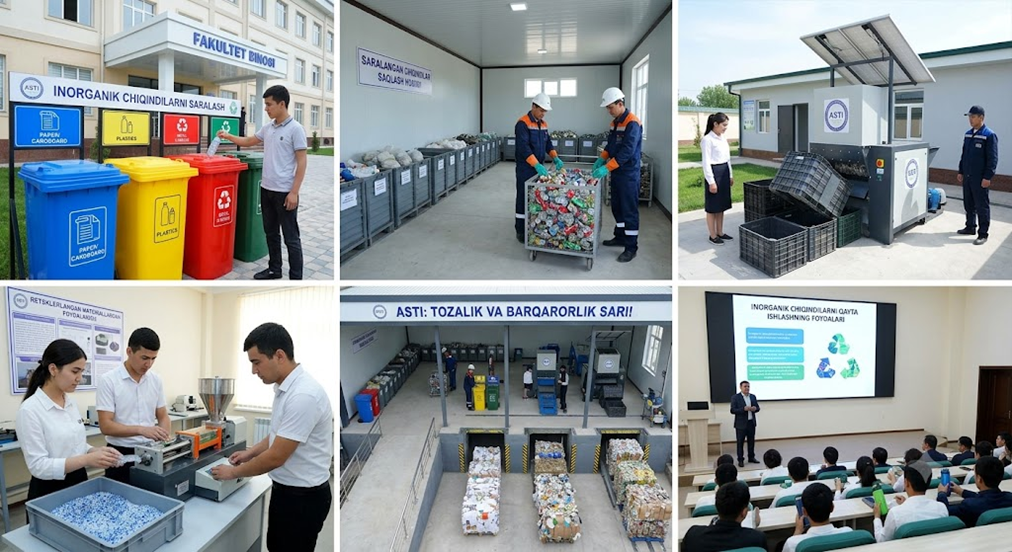
Andijan State Technical Institute has established a comprehensive inorganic waste treatment program to reduce the environmental impact of campus activities and maximize the recovery of recyclable materials. The program follows the principles of Reduce, Reuse, and Recycle (3R) and supports the university’s Green Campus policy by ensuring that non-hazardous inorganic waste is properly segregated, collected, and treated through environmentally responsible methods.
The main sources of inorganic waste on campus include academic buildings, administrative offices, laboratories, student residences, cafeterias, and maintenance activities. The waste stream consists primarily of paper, soft plastic, hard plastic, cardboard, packaging materials, glass, and metal containers.
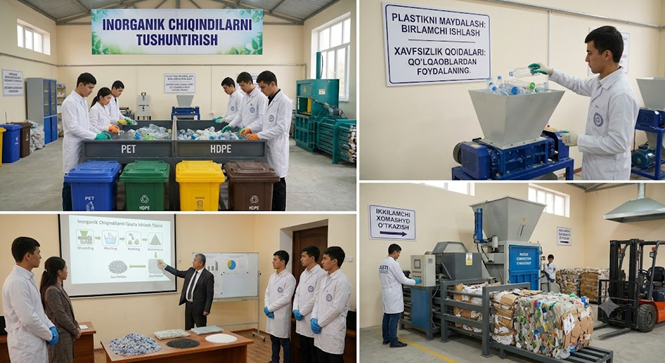
Waste segregation is carried out at the source using color-coded collection bins installed throughout the campus. Separate containers are provided for paper, plastics, metals, and other recyclable materials, allowing efficient collection and reducing contamination between waste streams.
418
Total Waste
Tons Generated150
Reused
Tons Recovered51
Down-cycled
Tons Processed30
Up-cycled
Tons Value AddedWaste Treatment Performance
During the reporting year, the institute generated 418 tons of non-toxic inorganic waste, representing a reduction of 12 tons compared with the previous year.
- 150 tons of inorganic waste were reused, including office paper, packaging materials, reusable containers, and furniture components.
- 51 tons were down-cycled into secondary raw materials through licensed recycling companies, where paper and plastics were processed into recycled products.
- 30 tons were up-cycled into higher-value products including recycled plastic products, paper-based materials and other value-added manufacturing applications.
Recycling and Resource Recovery
The university cooperates with licensed recycling organizations to ensure recyclable materials are collected, transported, and processed according to national environmental regulations. Paper, plastic, cardboard and other recyclable materials are periodically transferred to certified recycling facilities, reducing landfill disposal while conserving valuable natural resources.
In addition, the institute operates a collection system for small electronic waste, printer cartridges, used office equipment, and recyclable packaging materials.
Regular awareness campaigns encourage students and staff to separate waste correctly, reduce single-use plastics, and actively participate in recycling initiatives.
Key Initiatives
- Digital document management to reduce paper consumption.
- Double-sided printing and paper reuse in administrative offices.
- Collection of plastic bottles and packaging for recycling.
- Environmental education programs and Green Campus campaigns.
- Student-led clean-up and recycling activities.
Environmental Impact
As a result of these initiatives, 231 tons (55.3%) of the total inorganic waste generated during the reporting year were successfully recovered through reuse, recycling, down-cycling, and up-cycling processes.
These efforts significantly reduce landfill disposal, lower greenhouse gas emissions associated with raw material production, conserve natural resources, and strengthen the university’s commitment to a circular economy.
Contribution to the Sustainable Development Goals
- SDG 11 – Sustainable Cities and Communities
- SDG 12 – Responsible Consumption and Production
- SDG 13 – Climate Action
Sustainability Commitment
Through continuous monitoring, infrastructure improvements, and environmental awareness programs, Andijan State Technical Institute continues to enhance its waste management performance, increase recycling rates, minimize environmental impacts, and build a cleaner, greener, and more sustainable campus for future generations.