Toxic Waste Treatment Program
Safe Management of Hazardous Waste for a Sustainable Campus
Program Description
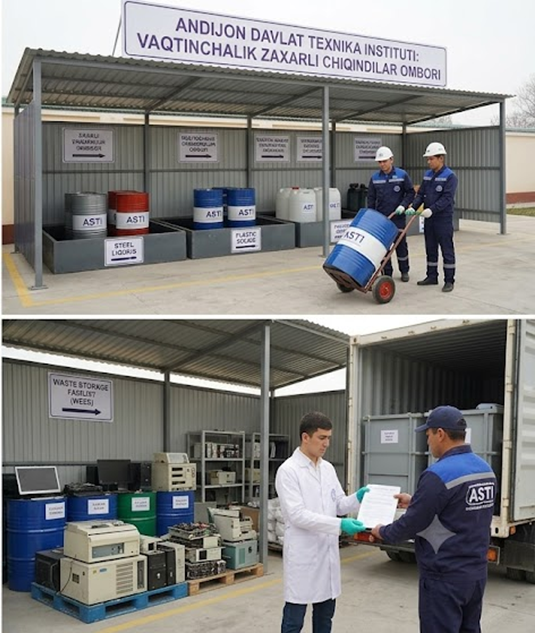
Andijan State Technical Institute has established a comprehensive toxic waste management program to ensure the safe handling, storage, transportation, treatment, and disposal of hazardous waste generated from teaching, research, laboratory activities, information technology services, and campus maintenance. The program complies with the environmental legislation of the Republic of Uzbekistan and follows the principles of sustainable campus management and environmental protection.
Hazardous waste generated on campus includes electronic waste (WEEE), laboratory chemicals, used batteries, fluorescent lamps, printer cartridges, contaminated laboratory materials, and other hazardous substances. All toxic waste is separated at the point of generation, labeled according to its hazard category, and temporarily stored in designated hazardous waste storage areas before being transferred to licensed waste management organizations.
Each faculty and laboratory is responsible for identifying hazardous waste and ensuring proper segregation. Laboratory technicians and environmental management personnel provide guidance on waste handling procedures, safe packaging, labeling, and documentation in accordance with institutional safety regulations.
Electronic Waste Management
Electronic waste, including obsolete computers, laboratory instruments, printers, monitors, electronic components, cables, and accessories, is collected separately through designated e-waste collection points.
Equipment that remains functional is repaired or refurbished for further institutional use whenever possible. Non-reusable electronic equipment is transferred to certified recycling companies for the recovery of valuable materials such as metals, plastics, and electronic components.
Laboratory Chemical Waste
Laboratory chemical waste is collected in chemically compatible containers, clearly labeled, and stored in secure temporary hazardous waste storage facilities.
Depending on the chemical properties, hazardous laboratory waste undergoes neutralization, recycling, recovery, or environmentally sound disposal by authorized hazardous waste treatment companies.
Treatment Results During the Reporting Year
During the reporting year, the institute generated 4.0 tons of hazardous waste. Through its toxic waste management program:
- 1.5 tons were reused through equipment refurbishment and recovery of reusable materials.
- 1.1 tons were down-cycled into secondary raw materials through certified recycling processes.
- 0.9 tons were up-cycled into higher-value products and recovered materials using environmentally responsible technologies.
Continuous Improvement Initiatives
- Designated hazardous waste storage areas for laboratories and technical departments.
- Separate collection points for electronic waste, batteries, fluorescent lamps, and printer cartridges.
- Regular inspections of hazardous waste storage facilities.
- Training programs on laboratory safety and hazardous waste handling for students, researchers, and technical staff.
- Periodic environmental monitoring and internal audits to ensure compliance with national environmental regulations.
- Awareness campaigns promoting the safe handling, reduction, reuse, and recycling of hazardous materials.
Environmental Impact
These measures significantly reduce the environmental risks associated with hazardous waste, prevent soil and water contamination, recover valuable resources from electronic waste, and improve occupational health and safety across the campus.
The university remains committed to strengthening its hazardous waste management system through continuous monitoring, staff training, and cooperation with licensed environmental service providers.
Contribution to Sustainable Development Goals
- SDG 3 – Good Health and Well-being
- SDG 6 – Clean Water and Sanitation
- SDG 12 – Responsible Consumption and Production
- SDG 13 – Climate Action
- SDG 15 – Life on Land