Sewage Disposal Program
Sustainable Wastewater Collection and Environmental Protection
Description
The disposal and management of sewage and wastewater at Andijan State Technical Institute (ASTI) are conducted in strict accordance with the environmental regulations and water management laws of the Republic of Uzbekistan.
The campus wastewater management infrastructure is organized as follows:
Public Sewerage Network Integration
All domestic wastewater, including sewage from student dormitories, administrative buildings, and campus canteens, is directly discharged into the centralized municipal sewerage network managed by the regional state water utility company, "Andijon Suv Ta'minoti" LLC.
This public utility ensures that all municipal wastewater is safely transported to regional wastewater treatment plants (WWTP) for effective biological and chemical purification before being discharged into natural water bodies or reused for agricultural irrigation.
On-Campus Pre-treatment and Drainage
ASTI maintains its internal drainage and sewage pipelines to ensure smooth and efficient flow, preventing leakage or contamination of campus soil.
Specialized grease traps are installed at university canteens to pre-treat kitchen wastewater before it enters the main sewerage system.
Stormwater and Rainwater Management
Rainwater drainage systems are maintained separately from internal sewage pipelines to prevent overloading the municipal sewerage network during periods of heavy rainfall.
Green Campus Initiative
As part of its Green Campus initiative, Andijan State Technical Institute continuously upgrades its sanitation infrastructure, improves maintenance procedures, and strengthens cooperation with local water supply and wastewater authorities to ensure reliable and environmentally sound sewage disposal.
Contribution to Sustainable Development Goals
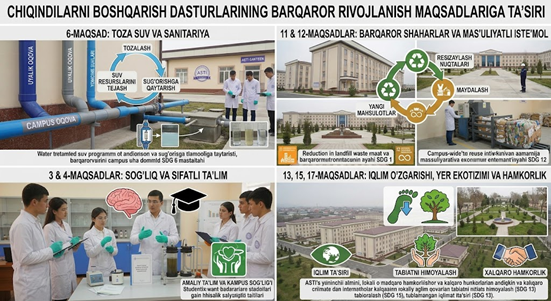
- SDG 6 – Clean Water and Sanitation
- SDG 3 – Good Health and Well-being
- SDG 11 – Sustainable Cities and Communities
- SDG 12 – Responsible Consumption and Production
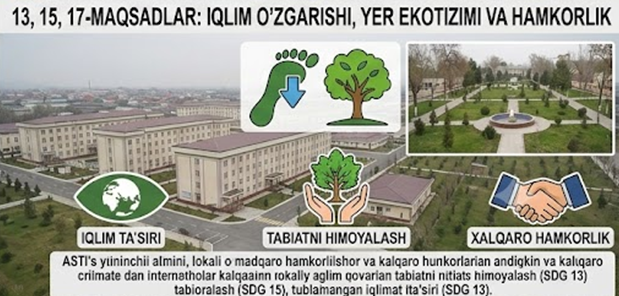
- SDG 13 – Climate Action
Sustainability Commitment
Through effective wastewater collection, safe disposal practices, regular infrastructure maintenance, and environmental awareness initiatives, the institute minimizes the environmental impact of wastewater while providing a clean, healthy, and sustainable campus environment.