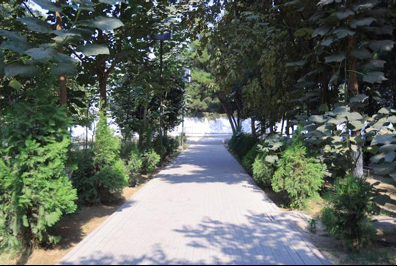
Pedestrian paths on campus
Number of Transportation Initiatives to Decrease Private Vehicles on Campus
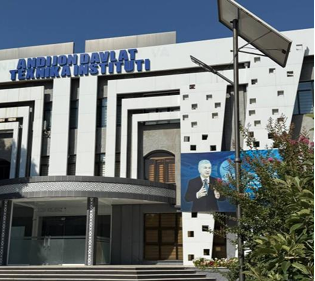
Andijan State Technical Institute has implemented a range of transportation initiatives aimed at reducing the use of private vehicles on campus and promoting sustainable mobility among students, academic staff, administrative personnel, and visitors.
These initiatives contribute to lowering carbon emissions, reducing traffic congestion, improving air quality, and creating a more environmentally friendly campus environment.
The university encourages the use of alternative transportation modes through the following initiatives:
Transportation Initiatives
| No. | Transportation Initiative |
|---|---|
| 1 | Promotion of public transportation through access to bus routes No. 222, No. 80, No. 77, and No. 394 serving the campus. |
| 2 | Availability of campus bicycles for students and staff. |
| 3 | Provision of bicycle parking facilities across the campus. |
| 4 | Development of pedestrian-friendly pathways throughout the campus. |
| 5 | Installation of Electric Vehicle (EV) charging points. |
| 6 | Awareness campaigns promoting sustainable transportation and environmental protection. |
| 7 | Encouragement of walking and cycling for short-distance travel within the campus. |
| 8 | Limitation of parking expansion to discourage excessive private vehicle use. |
| 9 | Integration of sustainable transportation concepts into educational and research activities. |
| Total Number of Transportation Initiatives: 9 | |
Impact and Contribution
These initiatives reflect the university's commitment to sustainable transportation management and support the objectives of the UI GreenMetric World University Rankings.
By providing attractive alternatives to private vehicle use, Andijan State Technical Institute continues to reduce its environmental impact while promoting a greener and healthier campus culture.
Key Benefits
- Reduction of carbon emissions and air pollution.
- Lower traffic congestion on campus.
- Promotion of walking, cycling, and public transportation.
- Support for electric and zero-emission vehicles.
- Improved campus accessibility and safety.
- Contribution to the university's Green Campus strategy.
- Support for sustainable mobility and climate action goals.